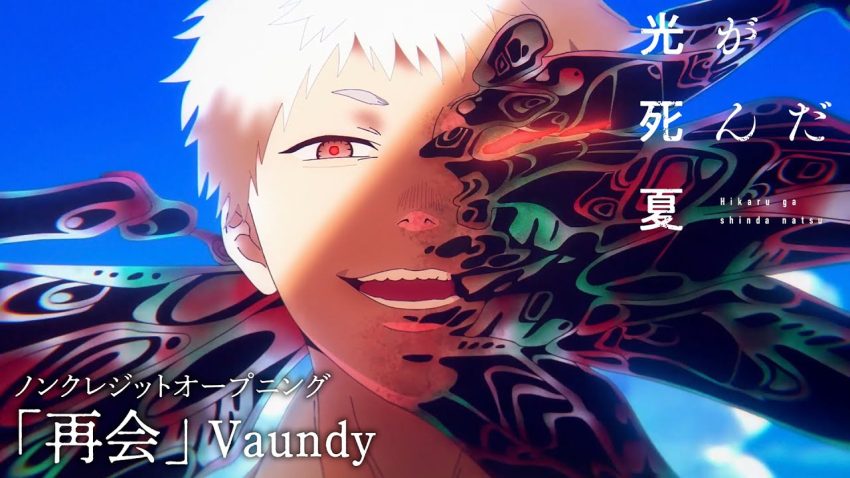
If you follow the manga awards circuit in Japan, specifically the Kono Manga ga Sugoi! (This Manga is Amazing!) list, you know they rarely miss. When a title tops the “Male Readers” category, it’s usually a shonen juggernaut like Chainsaw Man or Spy x Family.
But in 2023, the winner was something… quieter. Something unsettling. Something that feels like it’s rotting from the inside out.
I’m talking about The Summer Hikaru Died (Hikaru ga Shinda Natsu).
I picked up Volume 1 because the cover art intrigued me. It looks like a standard “slice of life” shot of two boys in the summer heat, but the lighting is just slightly off. The shadows are too deep. The eyes of the character on the left look a little too empty. I thought I was getting a coming-of-age drama.
Instead, I sat in my room at 2 AM, skin crawling, terrified to look out my window at the trees.
Vibe Check: This isn’t jump-scare horror. This is “stick your hand in a box of slime” horror. It’s humid, sticky, claustrophobic, and deeply psychological. Imagine the body horror of The Thing mixed with the rural isolation of Higurashi: When They Cry, all wrapped up in a tragic story about codependency.
The Premise: “I Know You’re Not Him, But I Don’t Care”
The setup is brilliant in its simplicity, and it wastes zero time.
We are in a tiny, isolated rural village in Japan—the kind of place where everyone knows everyone, the cicadas never stop screaming, and old superstitions still hold weight.
Yoshiki and Hikaru have been inseparable best friends since they were toddlers. They do everything together. But one winter day, Hikaru wanders up into the mountains alone. He goes missing for a week. When he finally comes back, he seems… fine. He remembers Yoshiki. He laughs the same. He looks the same.
But Yoshiki knows.
In the very first chapter, in a scene that gave me absolute chills, Yoshiki confronts him. He looks his best friend in the eye and says, “You’re not Hikaru.”
And the thing wearing Hikaru’s face? It doesn’t deny it. It smiles—a smile that stretches a little too wide—and admits it. It killed the real Hikaru. It took his body, his memories, and his life.
Here is the kicker: The “Thing” begs Yoshiki not to tell anyone. It says if the village finds out, they will kill it, and Yoshiki will be alone. And because Yoshiki loves Hikaru (or the memory of him) so intensely that he cannot function without him, he makes a deal with the devil. He agrees to pretend this monster is his best friend.
So begins a summer where Yoshiki hangs out with a creature that looks like his dead friend, acts like his dead friend, but occasionally… melts.
Why It Hits Different: A Masterclass in Atmospheric Dread
I have read a lot of horror manga—Junji Ito, Kazuo Umezu, Masaaki Nakayama. Usually, the monster is the enemy. In The Summer Hikaru Died, the monster is the protagonist’s emotional crutch. That dynamic changes everything.
1. The Art by Mokumokuren is Visceral
This is Mokumokuren’s debut work, which is frankly insulting to other artists because the talent here is absurd. The art style is sketchy, rough, and incredibly textured.
You can practically feel the humidity on the page. The use of blacks and grays creates this suffocating atmosphere. The way Mokumokuren draws “The Thing” (fake Hikaru) is genius. One moment he looks like a cute teenage boy. The next, his neck elongates weirdly, or his eyes turn into black voids, or his arm transforms into a mass of tentacles and eyes.
There is a specific focus on sound effects (onomatopoeia). In many panels, the sound effects for the cicadas (min min min) crowd the page, overlapping the dialogue bubbles. It creates a visual noise that mimics the sensory overload of a hot summer day. It makes you feel anxious, just like Yoshiki.
2. The Body Horror is “Wet”
I don’t know how else to describe it. The horror elements aren’t dry bones and ghosts; they are fleshy, wet, and organic.
When fake-Hikaru touches Yoshiki, the art conveys a sensation of dampness. There are scenes where the creature tries to show affection, but because it doesn’t understand human biology, it comes off as invasive and terrifying. It creates this bizarre tension where you are simultaneously scared for Yoshiki’s safety and heartbreakingly sad for the creature, which just wants to be accepted.
3. It explores Grief and Codependency
Beneath the eldritch horror, this is a story about how grief can rot your brain.
Yoshiki is not a hero. He is a traumatized kid. He knows he is harboring a monster. He knows this thing ate his best friend. But the alternative—accepting that Hikaru is dead and gone forever—is too painful. He chooses a lie over the truth.
The manga asks a brutal question: How much of a person is their body, and how much is their soul? If this creature has Hikaru’s memories, his voice, and his mannerisms, is he “dead”?
The relationship between them is often tagged as “BL” (Boys Love) by fans, and while the magazine is Seinen, the romantic subtext is text. It’s a toxic, doomed love story. Yoshiki lets the monster get close because he is starved for connection, and the monster clings to Yoshiki because Yoshiki is its only anchor to humanity. It is painful to watch.
4. The Rural Folk Horror
The setting is a character itself. The village has secrets. We start to learn about local deities, ancient rituals, and why the mountain is off-limits. It gives off major Midsommar or Noroi: The Curse vibes. The villagers are suspicious, the elders are creepy, and you get the sense that Hikaru’s death wasn’t an accident, but part of a cycle.
How & Where to Read (Support the Creator!)
This is a series where the visual quality matters immensely. Do not read low-quality scans; you will miss the texture of the pencil work.
Official English Publisher: Yen Press
-
Physical Volumes: I highly, highly recommend buying the physical books. Yen Press has done a fantastic job with the translation and the print quality. The stark black-and-white contrast looks incredible on paper. Volume 1 and onwards are available at Barnes & Noble, Amazon, RightStuf (Crunchyroll Store), and local comic shops.
-
Digital: You can buy digital versions on Amazon Kindle, ComiXology, or BookWalker.
For Japanese Readers:
It runs on the Young Ace Up website (Kadokawa), where you can often read recent chapters for free in Japanese.
Note on Format: Standard right-to-left reading.
Final Verdict: A Modern Horror Classic
Who is this for?
-
If you liked the body horror and tragedy of Parasyte: The Maxim…
-
If you enjoyed the small-town mystery of Higurashi or Persona 4 (but darker)…
-
If you want a story that explores complex, messy human emotions through a supernatural lens…
This is for you.
The Summer Hikaru Died is a slow burn. It doesn’t rely on cheap shocks. It relies on a pervasive sense of wrongness that settles in your gut and stays there. It is a story about love that is so strong it defies death, and the terrible price you pay for disturbing the natural order.
It is rare that a manga actually unnerves me. This one did. I couldn’t put it down, and I can’t stop thinking about it.
My Rating:
⭐⭐⭐⭐⭐ (5/5 Screaming Cicadas)
Status: Hauntingly Beautiful. S-Tier Horror.
Go grab Volume 1. Just… maybe don’t read it alone in the woods. And if your best friend comes back from a hike acting a little strange? Run.
Have you read this yet? Does the sound of cicadas creep you out now? Let me know in the comments below!