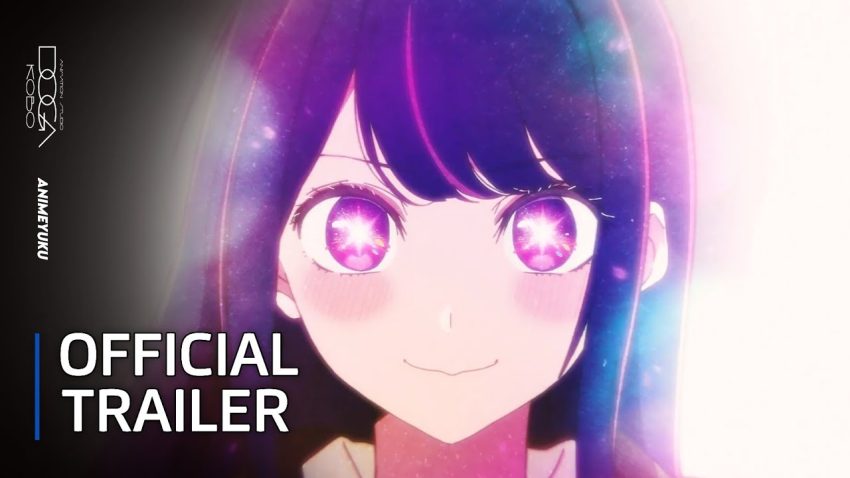
Okay, put down whatever generic isekai you are reading. We need to talk about Oshi no Ko.
If you haven’t started this yet, you have probably seen the memes. You’ve seen the fan art of the girl with the purple hair and the stars in her eyes. You’ve seen people screaming about “Chapter 1” or “Episode 1” on Twitter with no context other than crying emojis.
I picked this up a few years ago for one reason: The Author Combo.
Writer: Aka Akasaka (the genius behind Kaguya-sama: Love is War).
Artist: Mengo Yokoyari (the creator of Scum’s Wish).
When I saw those two names together, I knew I was in for a bad time. Akasaka writes 4D chess psychological battles, and Yokoyari draws beautiful people hurting each other. It was a match made in heaven (or hell). I expected a dark romance.
What I got was a searing, cynical, and heartbreaking exposure of the Japanese entertainment industry disguised as a murder mystery.
Vibe Check: This is not a happy idol manga. It looks like glitter, but it tastes like poison. Imagine Perfect Blue meets The Social Network, but everyone is a teenager with trauma. It is a psychological thriller wrapped in a frilly pop-star costume.
The Premise: The Lie is the Truth
I have to tread carefully here because Oshi no Ko has one of the wildest first volumes in manga history. The spoilers start early, so I will only give you the bare minimum setup.
Our story revolves around Ai Hoshino, the absolute center (the “Oshi”) of the idol group B-Komachi. She is perfection. She is 16, beautiful, talented, and seemingly untouched by the grime of the world.
But in this world, “Idols” are professional liars. Their job is to sell the fantasy of love to fans who don’t know any better.
Enter Gorou Amemiya, a countryside gynecologist and a massive fan of Ai. His life takes a weird turn when Ai Hoshino herself walks into his clinic. She’s pregnant. And she wants to keep the babies a secret so she can continue being an idol.
Gorou promises to deliver her children safely. But on the night of the delivery, tragedy strikes. Gorou dies… and wakes up as one of Ai’s newborn babies.
Yes, it sounds like a weird reincarnation fantasy. Stick with me. The “reincarnation” is just the vehicle to get us to the real plot.
The story isn’t about the baby antics. It’s about what happens a few years later. A shocking event shatters their family, revealing a dark conspiracy within the entertainment industry. The male lead (Gorou, now named Aqua) realizes that his new life isn’t a second chance; it’s a mission. He has to infiltrate the showbiz world—as an actor, a model, whatever it takes—to hunt down the person responsible for destroying his happiness.
It is Hamlet with glow sticks.
Why It Hits Different: A Masterpiece of Deception
I read a lot of drama manga. Usually, they lean too hard into melodrama. Oshi no Ko feels terrifyingly real because it is educational.
1. The Art: Candy-Coated Razor Blades
Mengo Yokoyari is a dangerous artist. Her style is soft, glossy, and incredibly cute. The characters have this distinct “shoujo” Manga look—big eyes, fashionable clothes, blushing cheeks.
But she uses that cuteness as a weapon.
The most iconic visual trait in the series is the Star Eyes. When characters are lying, performing, or tapping into their “star power,” their eyes literally glow with six-pointed stars. It’s mesmerizing.
But Mengo is also a master of the “dead eyes” look. When the mask slips—when an actor realizes they are being used, or when a character has a panic attack—the art shifts. The shadows get heavy. The panels feel claustrophobic. There is a specific double-page spread in the early chapters (you’ll know it when you see it) that is framed like a horror movie. It gave me legitimate chills.
2. It Exposes the “Real” Entertainment Industry
This isn’t a story about how “fun” it is to be famous. It is a brutal takedown of the machinery behind the fame.
Akasaka uses this manga to air out his grievances with the industry. We get entire arcs dedicated to:
-
Reality Dating Shows: How editors manipulate footage to create villains out of teenagers, leading to massive cyberbullying campaigns. (This arc, involving a character named Akane, is widely considered one of the best and most painful arcs in modern manga).
-
Manga Adaptations: The struggle between original authors and screenwriters who butcher the source material. (Ironically meta).
-
The Idol Economy: How little these girls get paid and how disposable they are.
It makes you look at your favorite YouTubers and actors differently. You realize that everything you see on a screen is a “product,” and there is a human being bleeding behind it.
3. The Characters: Broken People Acting Well
The cast is S-Tier.
-
Aqua Hoshino: He is the ultimate anti-hero. He is manipulative, cold, and willing to use anyone to get his revenge. But he’s also a doctor at heart; he can’t help but save people. Watching him war with his own nature is fascinating.
-
Kana Arima: (My personal MVP). The “failed child actor” who peaked at age 5 and is now struggling to find work. She is foul-mouthed, insecure, and desperate for validation. She is the most relatable character in the series. Her dynamic with Aqua is the emotional anchor of the story.
-
Akane Kurokawa: The method actor genius. She starts quiet but becomes a terrifying force of nature. I won’t say more, but her ability to “profile” characters is Sherlock Holmes-level stuff.
4. The “Acting” Scenes
Since this is a manga, we can’t “see” them acting. But the writing is so good you feel it.
There is an arc where the cast is performing a stage play (Tokyo Blade). The manga spends chapters breaking down how they act. Emotional acting vs. Method acting. Adjusting your performance to match the lighting on stage. “Improv” battles.
It’s like reading a sports manga, but the sport is emotional manipulation. The tension during these acting battles is higher than in most shonen fights.
How & Where to Read (Support the Artists!)
This series is currently exploding because of the anime, but the manga is way ahead and dives deeper into the internal monologues.
Where to Read:
-
Manga Plus (Shueisha): This is the best place. It is free. You can read the first three chapters and the latest three chapters. If you download the mobile app, they often have a “First Read Free” campaign where you can binge the whole thing once.
-
Shonen Jump App / Viz Media: For $2.99/month, you get the entire vault. The translation is official and high quality.
-
Physical Volumes: Yen Press is publishing the English graphic novels. They are bright, colorful, and look amazing on a shelf. The covers usually feature one character in high-fashion attire.
Format Note:
Standard Right-to-Left reading.
Final Verdict: The S-Tier Thriller
Who is Oshi no Ko for?
-
If you liked the industry commentary of Bakuman but wanted it to be darker…
-
If you liked the psychological mind games of Kaguya-sama: Love is War or Death Note…
-
If you just want a mystery that will keep you guessing until the literal last page…
This is for you.
It’s a story about lies. It tells us that lies are a form of love. But it also shows us the cost of living a lie. It will make you laugh at the silly idol antics, and then five pages later, it will leave you staring at the ceiling questioning the morality of the internet.
It is smart, it is gorgeous, and it is undoubtedly one of the most important manga of the decade.
My Rating:
⭐⭐⭐⭐⭐ (5/5 Glowing Star Eyes)
Status: Absolute Peak Fiction. Prepare to be hurt.
Go read Chapter 1. It is technically a prologue that is about 40 pages long (or 90 minutes in the anime). It stands alone as a perfect short story. Once you finish that prologue, you won’t be able to stop.
Are you Team Kana or Team Akane? (Choose carefully, this is a war zone). Let me know in the comments!